
By Trapper Tim’s // Professional Nuisance and Pest Control Services Editorial Team · Updated 2026-07-27
Small, accessible nests under 6 inches with clear entry points allow DIY spray treatment at dusk using EPA-approved aerosols. Large hives, wall-embedded colonies, Africanized bee suspicion, or allergy risks require professionals like Trapper Tim’s in Noblesville, IN, who safely remove nests and prevent dangerous re-infestation.
Small, exposed wasp nests reachable from the ground suit cautious DIY treatment, but hidden nests in walls, eaves, or siding gaps warrant professionals. Trapper Tim’s Professional Nuisance and Pest Control Services, based in Noblesville, IN, safely handles bee and wasp removal when stings, allergies, or hard-to-reach colonies pose real risks.
Small nests of docile bees away from doorways sometimes suit a cautious DIY approach with protective clothing. Wasp nests, large colonies, or hidden hive locations demand licensed help. Trapper Tim’s, with 20 years of humane wildlife and pest control experience, handles carpenter bees and stinging-insect nests safely, protecting homeowners from stings and structural damage professional treatment prevents.
Key Takeaways
- DIY spray treatments often fail because bees and wasps nest deep inside walls and structures.
- Professional removal protects you from stings; wasp nests contain dozens of aggressive insects ready to attack.
- Trapper Tim’s in Noblesville, IN handles bee and wasp removal safely without destroying colonies or property.
- Improper removal leaves nests intact, causing reinfestation within weeks; professionals eliminate the problem permanently.
When Should You Call a Pro for Stinging Insects?
Nest location and insect species determine whether professional stinging insect removal becomes necessary. A colony tucked under an eave, hidden inside a shrub, or hanging from a porch beam creates access problems that a store-bought spray can rarely solve safely. Homeowners and property managers face real risk when a nest sits above reach or near a high-traffic entry point.
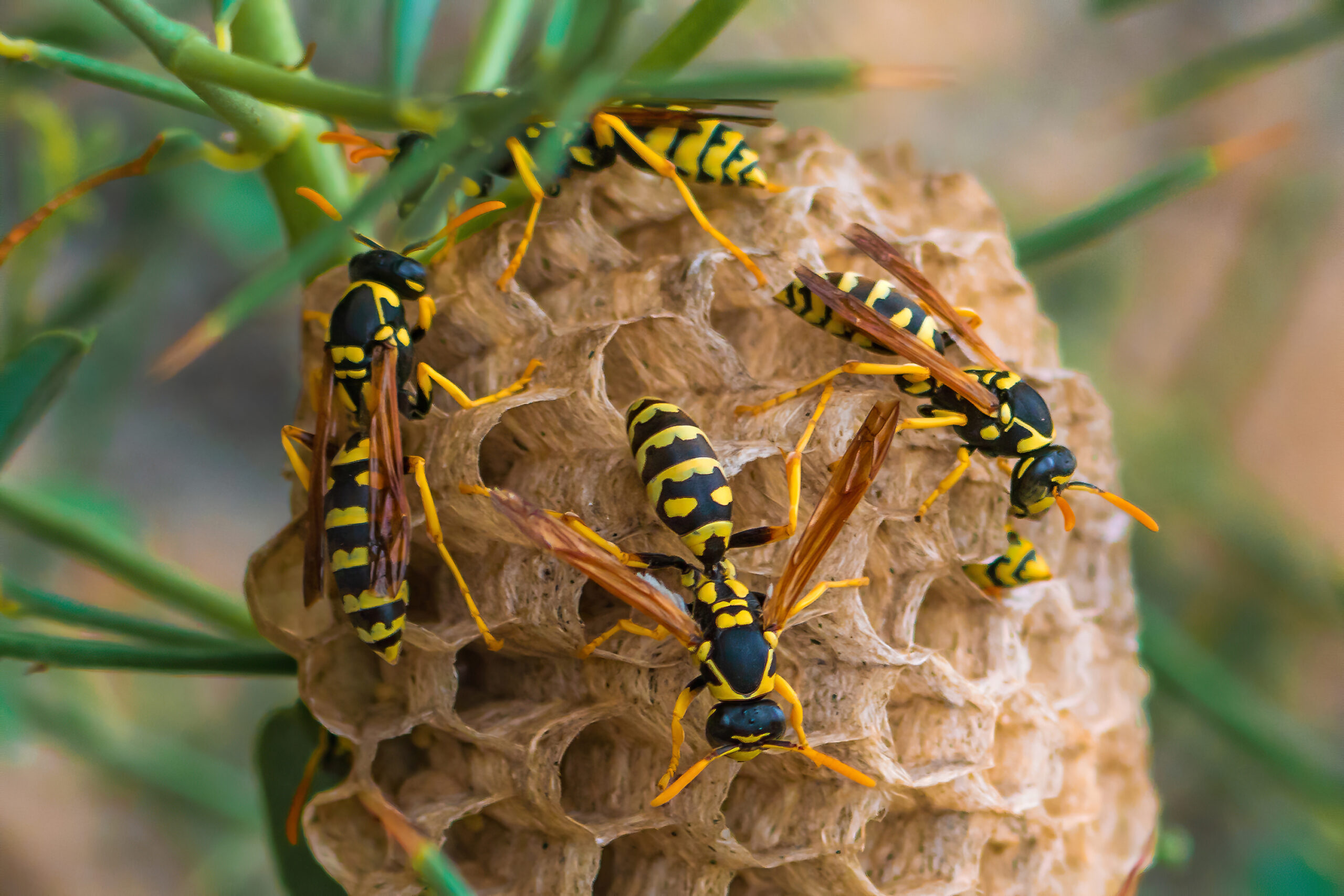
Species matters just as much as location. Paper wasps, yellow jackets, and hornets each defend their nests differently, and some react far more aggressively to disturbance than others. Misjudging the species turns a simple spray job into a swarm event.
Does the type of nest change the removal approach?
Yes. Ground-level yellow jacket nests, papery hornet structures, and open paper wasp combs each require different handling. Bee removal in Morgan County also demands extra care. Bees serve pollination roles that pest control professionals try to preserve rather than eliminate outright.
What about carpenter bees drilling into wood siding?
Carpenter bees bore into fascia boards, deck rails, and siding rather than building visible nests. Trapper Tim’s addresses carpenter bee infestations alongside standard wasp nest removal work.
Quick reference for common warning signs:
- Nest positioned higher than a step ladder can safely reach
- Repeated activity near doors, windows, or play areas
- Uncertain identification of the species involved
- Prior allergic reactions among household members or tenants
Professional removal exists precisely for these harder calls, offering humane, effective solutions where DIY methods fall short. cite-1
What Risks Come With DIY Wasp Nest Removal?
Grabbing a can of spray off the hardware store shelf feels like the fastest fix for a nest tucked under the eaves. Speed, though, does not equal safety. A can of aerosol treatment rarely addresses the underlying stinging insect removal challenge. Rushed attempts often provoke defensive swarms rather than eliminate them.
Safety concerns extend beyond the person holding the spray can. Children playing in the yard, pets roaming near the nest, and neighbors on the other side of a fence all face exposure once an agitated colony scatters. Weighing that risk against the convenience of a quick spray job changes the calculation for most property owners.
Improper treatments also create unintended environmental harm. Chemicals applied without precision can injure the insects unnecessarily and affect surrounding plants, soil, or nesting sites that other wildlife depend on. Professional bee removal and wasp nest removal methods focus on both an effective outcome and the well-being of people and animals. A balance that a rushed DIY attempt rarely achieves. cite-1
Is spraying a wasp nest myself dangerous?
Yes. Aerosol treatments applied at close range can trigger a defensive response from the entire colony within seconds. Multiple stings become far more likely, particularly for anyone with limited experience identifying nest entry points.
Can DIY methods harm bees unnecessarily?
Untrained treatment often kills beneficial pollinators along with aggressive species, disrupting local ecosystems. A measured, humane approach protects people while minimizing unnecessary harm to insects that pose little threat.
Why Choose a Humane Professional Removal Service?
Trained technicians resolve stinging insect problems faster and more safely than store-bought sprays ever can. Trapper Tim’s brings two decades of hands-on experience to stinging insect removal, backed by a five-star rating on Google that reflects consistent client satisfaction across Morgan County. cite-1 That track record matters when a nest sits inches from a doorway or a child’s bedroom window.
Safety and effectiveness go hand in hand with humane practice. Rather than relying on harsh chemical sprays that can drift toward pets or landscaping, bee removal work through Trapper Tim’s uses eco-friendly methods designed to protect both the property and the surrounding environment. cite-1
Is professional wasp nest removal worth the cost compared to DIY?
Store-bought sprays often miss the nest interior, leaving colonies to rebuild within days. Professional wasp nest removal in Morgan County targets the full colony, not just the visible entrance, reducing the chance of a repeat problem.
How quickly can a local team respond?
Local coverage speeds up response times considerably. Trapper Tim’s serves Morgantown, Trafalgar, Nineveh, Bargersville, Whiteland, Greenwood, Columbus, Edinburgh, Martinsville, Mooresville, Monrovia, and Nashville, Indiana.
Homeowners with questions can call (765) 913-7553 directly to schedule an inspection before a small nest becomes a bigger safety risk.
When stinging insects establish themselves on your property, the decision between DIY removal and professional intervention hinges on safety, effectiveness, and peace of mind. Minor situations may warrant cautious self-management. Bee and wasp colonies demand expertise that protects your family, pets, and the insects themselves. Professional removal services eliminate guesswork and risk, delivering humane solutions with lasting results. For Morgan County residents facing uncertain or escalating infestations, experienced professionals provide the knowledge and equipment necessary to resolve the problem thoroughly and safely.
Why DIY Stinging Insect Removal Often Fails
When is it safe to remove a wasp nest yourself?
Small, exposed nests reachable from the ground and docile bee colonies away from doorways suit cautious DIY treatment with protective clothing.
Why does DIY spray treatment often fail on stinging insects?
Bees and wasps often nest deep inside walls and structures. Aerosol sprays rarely reach the colony, leaving nests intact and causing reinfestation within weeks.
Who should handle carpenter bees boring into wood siding?
Trapper Tim’s addresses carpenter bee infestations, which bore into fascia boards, deck rails, and siding, alongside standard wasp nest removal work.