

Infestation severity at home depends on droppings frequency, nesting material, and chewed entry points found during inspection. Homeowners checking behind appliances, under sinks, and inside cupboards uncover early warning signs before populations grow. Trapper Tim’s is located in Noblesville, IN, us. With 20 years of experience, it identifies activity patterns and entry points to determine whether a property faces an isolated issue or a widespread infestation.
Key Takeaways
- Look for rodent droppings around food packages, drawers, cupboards, and under sinks immediately.
- Identify nesting materials like shredded paper, fabric, and dried plant matter throughout your home.
- Inspect wooden furniture and wiring for visible chewing marks indicating active rodent activity.
- Conduct thorough home inspections to determine rodent type, entry points, and infestation patterns early.
What Do You Need Before Assessing Severity?
A room-by-room inspection comes first. Any homeowner in Home tries to rate how bad a wildlife or rodent problem has become. Walking through the attic, crawl space, basement, and kitchen reveals the pest type, likely entry points, and patterns of activity that a quick glance misses. Skipping this step leaves property managers guessing, and guesswork costs time and money once damage spreads into walls or insulation.
Why Won’t I Just See the Pest Myself?
Rodents stay hidden by nature, and a homeowner may never actually spot a mouse or rat until the population has already grown large. Relying on sightings alone under-represents the real scope of an infestation. Gathering physical evidence closes that gap.
Before building a true infestation severity picture, gather evidence using this short checklist:
- Droppings or urine stains near food storage or baseboards
- Gnaw marks on wood, wiring, or insulation
- Nesting materials in attics, wall voids, or stored boxes
- Entry points such as gaps around pipes, vents, or rooflines
This evidence-gathering step functions as an assessment guide for Home residences of any size. Once collected, these findings feed directly into a scoring tool that ranks severity and guides the right response.
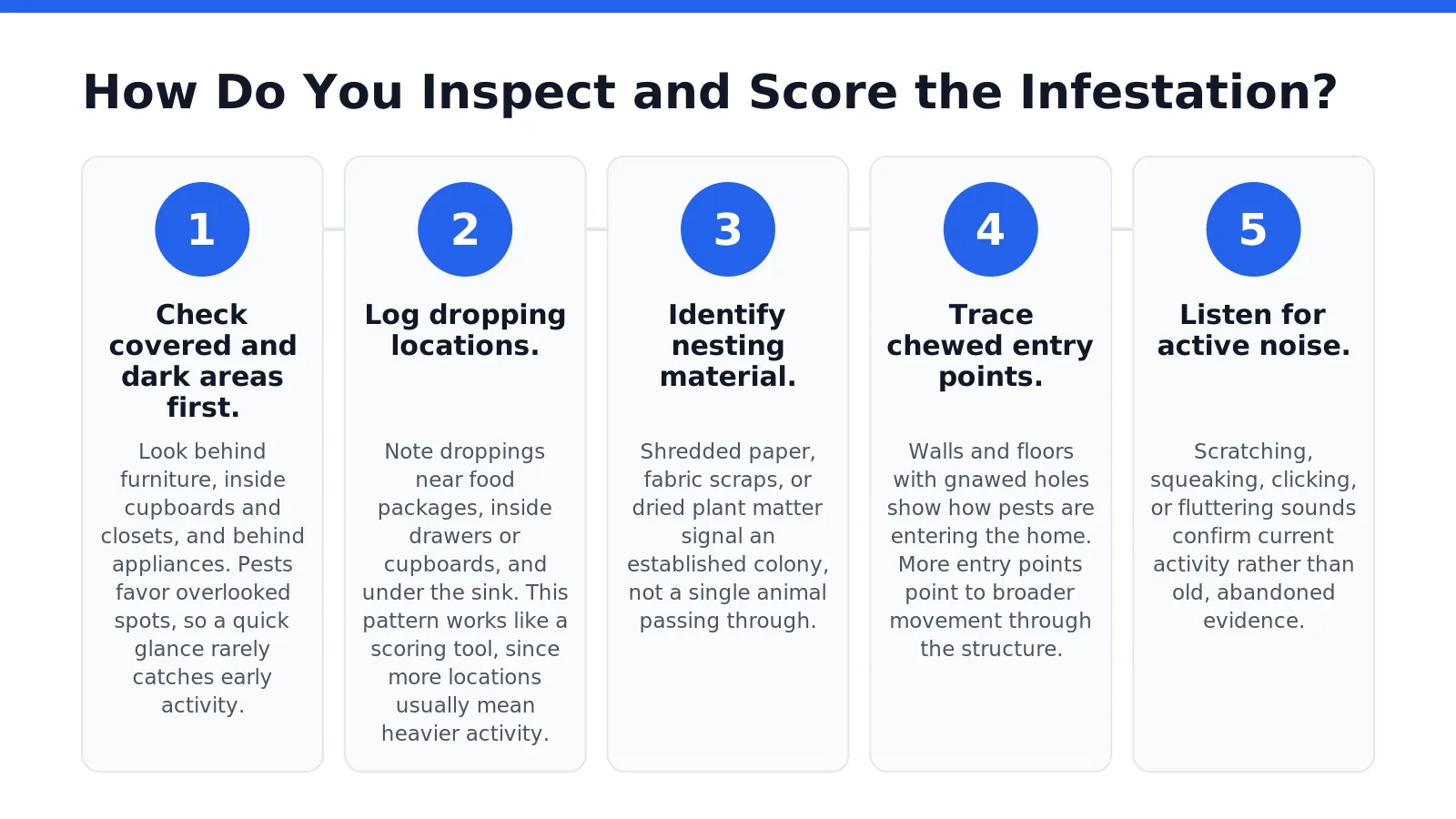
How Do You Inspect and Score the Infestation?
A proper inspection moves room by room, building a severity picture from physical evidence rather than guesswork. Homeowners who skip this step often underestimate how far a problem has spread before calling for help. The company recommends walking through the following five-step assessment guide before deciding whether the issue is isolated or widespread.
- Check covered and dark areas first. Look behind furniture, inside cupboards and closets, and behind appliances. Pests favor overlooked spots, so a quick glance rarely catches early activity.
- Log dropping locations. Note droppings near food packages, inside drawers or cupboards, and under the sink. This pattern works like a scoring tool, since more locations usually mean heavier activity.
- Identify nesting material. Shredded paper, fabric scraps, or dried plant matter signal an established colony, not a single animal passing through.
- Trace chewed entry points. Walls and floors with gnawed holes show how pests are entering the home. More entry points point to broader movement through the structure.
- Listen for active noise. Scratching, squeaking, clicking, or fluttering sounds confirm current activity rather than old, abandoned evidence.
How many signs mean a severe infestation?
A single sign, like one dropping or one faint noise, usually points to an isolated issue. Multiple signs across different rooms, especially nesting material paired with chewed entry points, indicate infestation severity has moved past the early stage. At that point, professional evaluation becomes the safer next move for any property manager or homeowner.
When Should You Call a Professional for Help?
Professional help becomes necessary the moment a homeowner confirms active bats, rodents, or other wildlife inside living or attic spaces. Waiting rarely helps. Bats roosting inside a home can quickly become a serious problem. Colonies grow and droppings accumulate faster than most owners expect. Delaying action only deepens the cleanup and raises health exposure.
Why does bat activity require urgent attention?
Bat droppings can harbor fungal spores that cause respiratory illnesses such as histoplasmosis when disturbed and inhaled. Sweeping or vacuuming guano without proper protection releases these spores into the air a family breathes. That risk alone separates a minor nuisance from a genuine infestation severity concern needing trained intervention.
Homeowners can use a simple assessment guide to decide when to escalate:
- Note the number of entry points and droppings found.
- Track whether activity is isolated to one room or spreading.
- Check for odors, staining, or structural damage.
- Apply a basic scoring tool weighting these factors to gauge urgency.
Trapper Tim’s was founded to provide effective, humane wildlife removal for communities facing exactly these situations. Operating from Noblesville, IN, the company extends that same humane, effective service to homeowners evaluating infestation severity in their own properties.
FAQ
What should you check first when assessing infestation severity?
Check covered and dark areas first, including behind furniture, inside cupboards and closets, and behind appliances. Pests favor these overlooked spots, so a quick glance rarely catches early activity before populations grow.
What signs point to an established colony rather than a single pest?
Nesting materials such as shredded paper, fabric scraps, and dried plant matter signal an established colony. Multiple dropping locations and several chewed entry points also indicate broader movement through the structure.
Why can’t homeowners rely on actually seeing the pest to judge severity?
Rodents stay hidden by nature, so a homeowner may never spot one until the population has already grown large. Gathering physical evidence like droppings, nesting material, and gnaw marks closes that gap.
Conclusion
In closing, accurately assessing infestation severity protects your home and family from escalating pest and wildlife problems. By recognizing early warning signs, documenting activity patterns, and understanding the scope of your situation, you establish a clear foundation for effective intervention. Professional inspection confirms what visual assessment reveals, ensuring that treatment addresses the root cause rather than surface symptoms. Taking decisive action at the appropriate severity level prevents minor concerns from becoming costly, widespread infestations that compromise your property’s integrity and safety.