
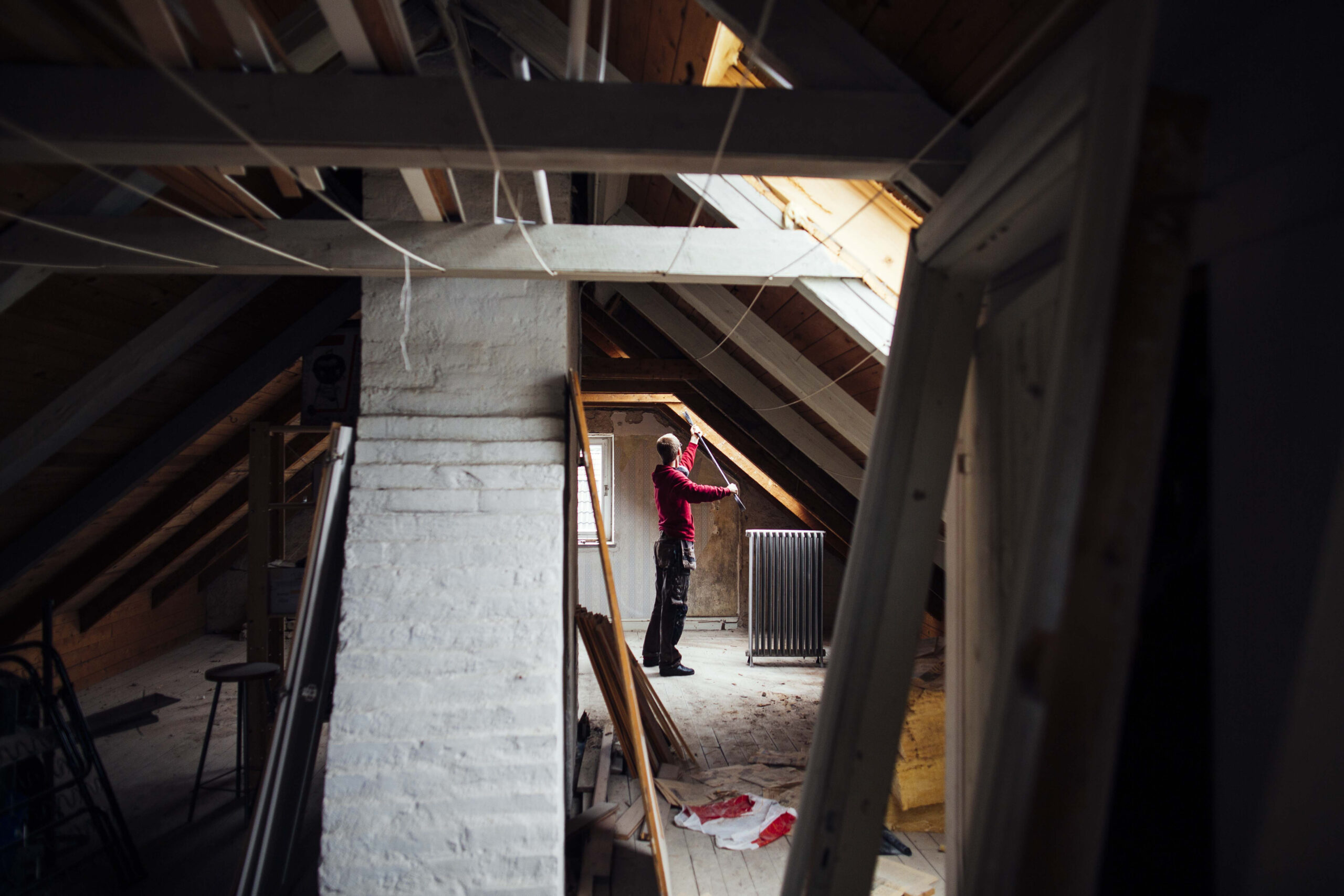
Wildlife den cleanup and sanitization in Morgan County addresses contamination left behind after raccoons, squirrels, bats, or opossums vacate attics and crawlspaces. Trapper Tim’s, with 20 years of humane wildlife control experience, removes droppings and nest debris, decontaminates affected areas, and neutralizes odor at its source, restoring the space to safe, livable condition for homeowners.
Key Takeaways
- Trapper Tim’s removes wildlife droppings, nest debris, and contamination from attics and crawlspaces throughout Morgan County.
- Our sanitization process neutralizes odors at the source and decontaminates surfaces where disease-causing pathogens hide.
- We restore spaces to healthy, safe conditions after wildlife removal is complete in your home.
- Trapper Tim’s provides 24/7 emergency wildlife den cleanup and sanitization services for Noblesville and surrounding areas.
What Does Full Den Cleanup Accomplish?
Full den cleanup addresses the half of a wildlife problem that trapping alone never touches. Removing a raccoon, squirrel, bat, or opossum from a Morgan County attic solves the immediate intrusion. Contamination stays behind in insulation, framing, and ductwork. That residue carries odor, structural risk, and sanitation concerns long after the animal is gone.
Attics make ideal denning sites because they stay warm and quiet, which is exactly why droppings and urine-soaked insulation build up fast in these spaces. Shed fur and nesting material collect in corners and along joists, often unnoticed until odor or staining spreads into living areas below. A thorough attic den cleanup targets these hidden zones first, since they hold the heaviest concentration of waste.
Why does a den smell so strong after the animal leaves?
Guano and urine buildup from denning animals produce odors that seep directly into a home’s living spaces. Left untreated, these smells intensify as waste dries and bonds to wood and drywall, making den repair and deodorize work essential rather than optional.
A complete service typically includes:
- Removing droppings, nesting debris, and contaminated insulation
- Disinfecting affected surfaces through wildlife den sanitization
- Repairing entry points and damaged materials
- Neutralizing odor at its source
For Morgan County homeowners searching den cleanup near me, Trapper Tim’s pairs humane removal with year-round protection against bats, carpenter bees, and other recurring invaders.
How Do You Contain and Remove Den Debris?
Containment starts with isolating the nest site before any material gets disturbed. Morgan County attics and crawlspaces holding raccoon, squirrel, bat, or opossum dens trap airborne spores and bacteria that drift down through ceilings and vents into living spaces below. Left untouched, that contamination spreads far beyond the original nesting site.
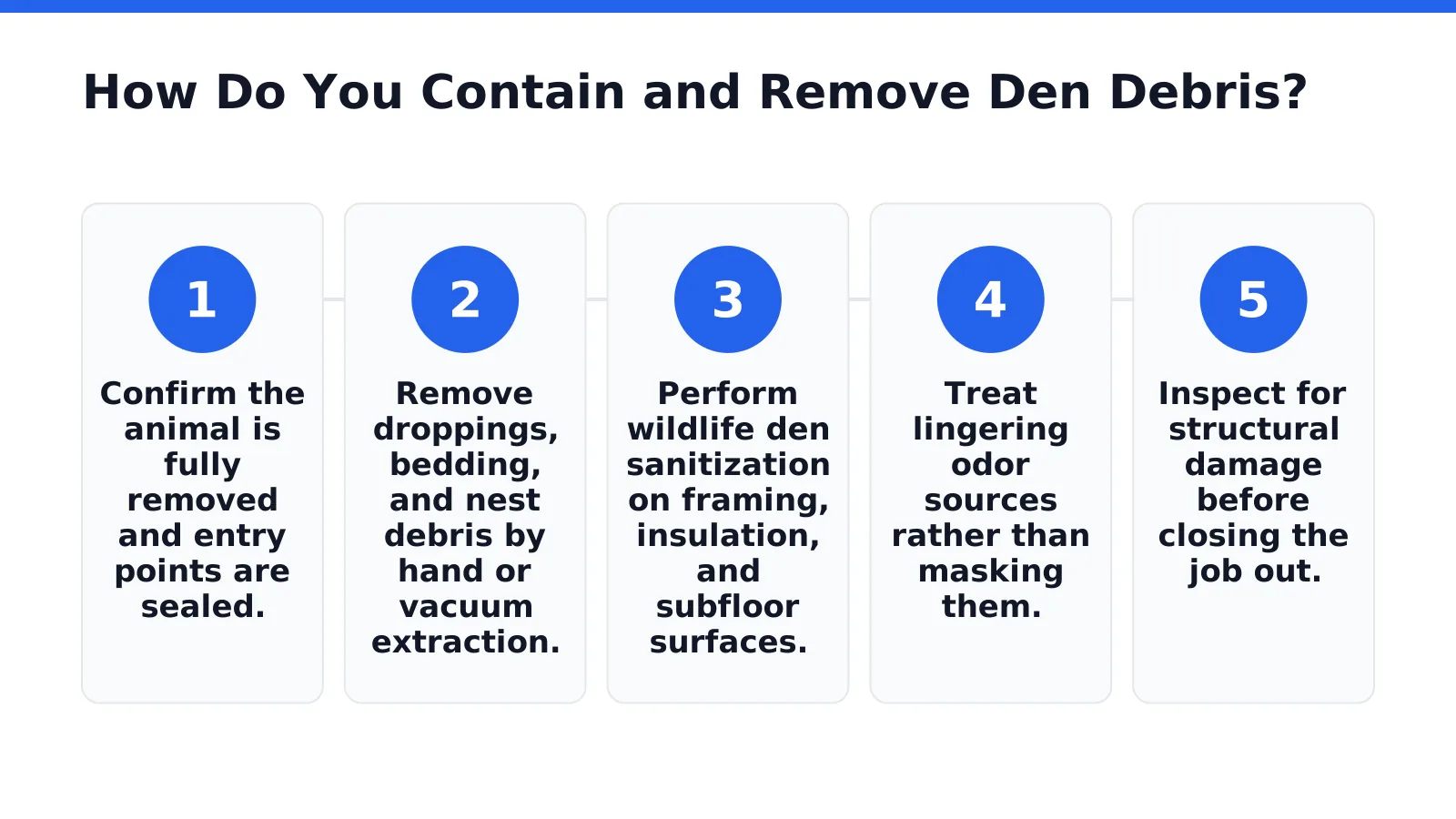
A thorough den cleanup follows a strict sequence, not a quick sweep-and-spray job. Technicians working across Morgan County properties typically move through these steps:
- Confirm the animal is fully removed and entry points are sealed.
- Remove droppings, bedding, and nest debris by hand or vacuum extraction.
- Perform wildlife den sanitization on framing, insulation, and subfloor surfaces.
- Treat lingering odor sources rather than masking them.
- Inspect for structural damage before closing the job out.
Disturbed droppings pose a real health risk. Fungal spores inside them can trigger respiratory illness, including histoplasmosis, once inhaled. That risk alone makes do-it-yourself removal a gamble for homeowners without proper respiratory protection.
What Does Attic Den Cleanup Actually Involve?
Attic den cleanup combines debris removal with full decontamination, not just hauling out visible nest material. Crews clear droppings and nesting debris, then decontaminate the affected attic or crawlspace surfaces so the space is safe to use again.
Does Den Repair Happen After Cleanup?
Yes. Den repair and deodorize work follows sanitization, addressing chewed wood, stained insulation, and compromised vapor barriers. Technicians also apply targeted treatments to former nesting areas, then schedule follow-up visits for continued protection.
Homeowners searching for den cleanup near me Morgan County services should expect a full-service protocol: removal, sanitization, repair, and deodorizing handled as one coordinated job, not separate calls.
How Is the Attic Decontaminated and Sanitized?
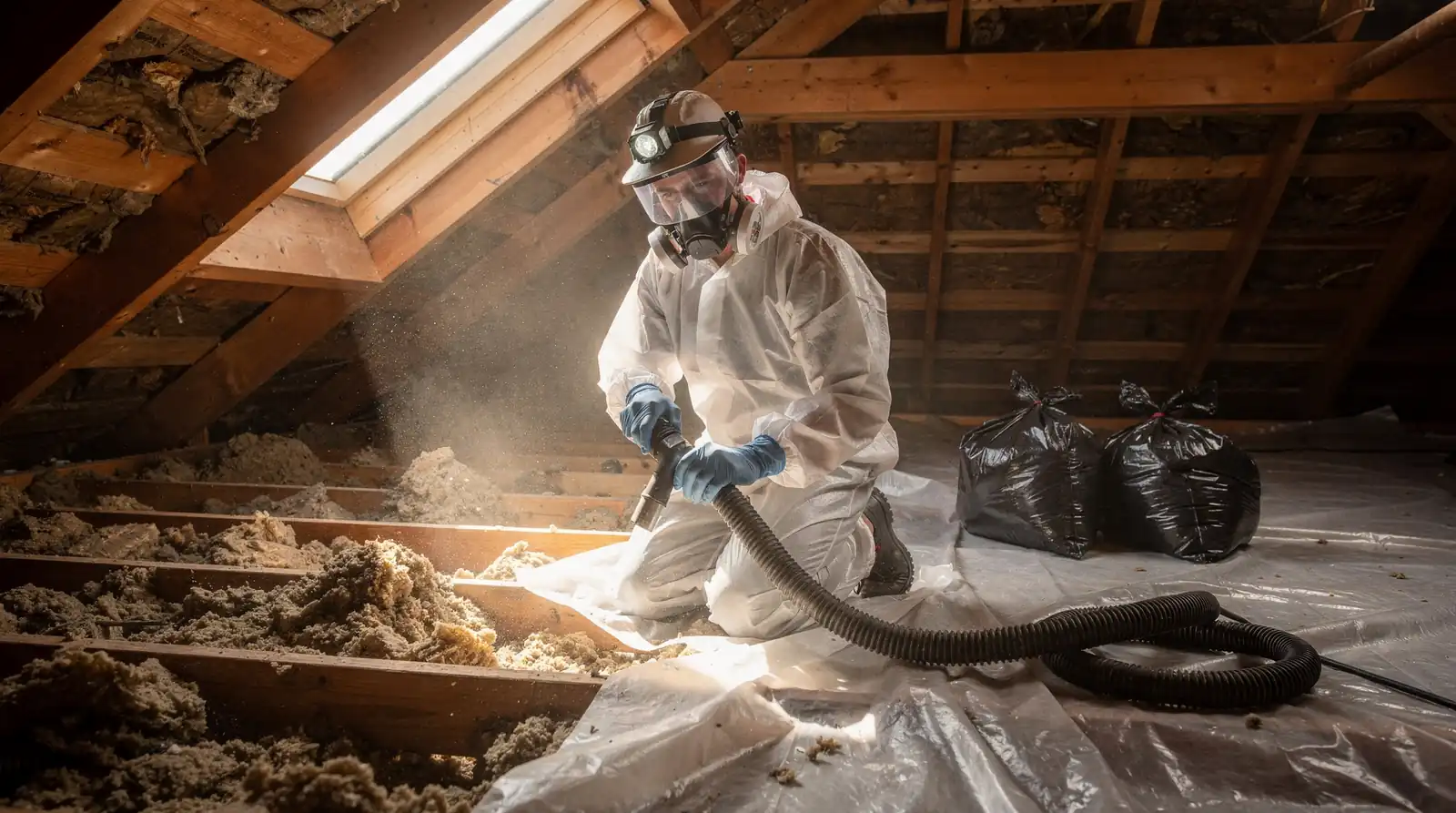
Technicians remove droppings, nest debris, and soiled material from the attic space before any surface gets treated. Raccoons, squirrels, and bats leave behind waste that carries hidden disease risk. A thorough den cleanup always starts with physical removal, not a quick wipe-down. Morgan County homes with established wildlife dens often need more than surface attention once an animal has been living inside the structure for weeks or months.
Insulation damaged by urine or droppings typically cannot be salvaged. Property managers and homeowners across Morgan County should expect contaminated insulation to be removed and replaced, since saturated material holds odor and bacteria no cleaning product fully reaches. This step matters most in bat-related cases. Urine soaks deep into attic wood and drywall, creating smells that linger long after the colony leaves.
A complete wildlife den sanitization follows a clear sequence:
- Extract all droppings, nesting material, and damaged insulation.
- Decontaminate exposed attic and crawlspace surfaces.
- Neutralize odor at its source rather than masking it.
- Sanitize remaining surfaces where disease can hide.
- Verify the space is dry, odor-free, and safe for continued use.
Does Attic Cleanup Include Repairing the Damage?
Full-service attic den cleanup work pairs decontamination with structural restoration, not just sanitizing. Packages built for Morgan County properties bundle removal, den repair and deodorize steps, and prevention measures into one visit. That combination keeps families from calling multiple contractors.
Residents searching for den cleanup near me Morgan County should expect a provider that handles the full chain: inspection, removal, decontamination, and repair, under one appointment.
How Do You Repair, Deodorize, and Seal a Den?
Full den repair follows a defined sequence: fix structural damage, neutralize odor, then seal every entry point against return. Skipping a step leaves Morgan County homes vulnerable to repeat intrusions and lingering contamination.
Den cleanup in Morgan County homes starts once an animal has been removed and the den site identified. Technicians trained in wildlife den sanitization follow a clear repair order so nothing gets missed:
- Inspect joists, insulation, and drywall for chew damage, staining, or structural weakening.
- Remove soiled insulation and debris left behind in the den area.
- Treat the site with enzyme-based cleaners to neutralize odor at its source rather than masking it.
- Rebuild damaged framing, drywall, or insulation to restore the space.
- Seal gaps, vents, and entry points so wildlife cannot reclaim the space.
Humane, eco-friendly methods guide each step, protecting the property without harming the animal that caused the damage. This matters most during attic den cleanup. Guano buildup and urine-soaked materials pose the greatest risk to indoor air quality.
How does den repair and deodorize differ from basic cleanup?
Den repair and deodorize work goes further than removing waste. It rebuilds compromised structure and eliminates odor at the molecular level, not just on the surface. A properly finished job leaves the space healthy and safe to use again.
What happens after the den is sealed?
Sealing stops repeat infestations by closing the access points that invited wildlife in. Property owners searching for den cleanup near me Morgan County services get structural repair, deodorizing, and sealing handled as one continuous process, preventing the same animal, or a new one, from returning.
What Mistakes Delay a Complete Den Cleanup?
Skipping parasite treatment tops the list of errors that stall a full den cleanup in Morgan County homes. Bats often carry mites, fleas, and bat bugs. These pests spread into living spaces if a den sits untreated after the animal leaves. Homeowners who focus only on visible droppings miss this hidden layer of contamination.
A rushed job also undermines wildlife den sanitization. Surface wiping without addressing nesting material or insulation leaves odor-causing residue behind, forcing a second visit later.
Why does attic cleanup take longer than expected?
Attic spaces hide contamination in insulation, framing joints, and ductwork that a quick inspection won’t catch. Thorough attic den cleanup requires removing affected material layer by layer, not just scooping visible debris. Standards built over twenty years of hands-on experience, backed by a 5-star Google rating, shape how each job gets handled from start to finish.
Common mistakes that delay full restoration include:
- Treating only the entry point instead of the entire den area.
- Ignoring parasite risk from bats, mites, and fleas.
- Skipping deodorizing after den repair and deodorize-morgan-tt06 work begins.
- Delaying inspection after removal, letting residue set into materials.
Property managers searching for reliable den cleanup near me Morgan County help benefit from a company founded specifically to deliver humane, effective wildlife removal, a mission that still guides every cleanup decision today.
FAQ
What does wildlife den cleanup in Morgan County include?
Trapper Tim’s removes droppings, nest debris, and contaminated insulation, disinfects affected surfaces, repairs entry points and damaged materials, and neutralizes odor at its source for a safe, livable space.
Guano and urine buildup from denning animals seeps into a home’s living spaces, and left untreated, these odors intensify as waste dries and bonds to wood and drywall.
How does Trapper Tim’s contain and remove den debris?
Technicians confirm the animal is fully removed and entry points sealed, remove droppings and nest debris by hand or vacuum, sanitize framing and insulation, treat odor sources, and inspect for structural damage.
Conclusion
In closing, wildlife den cleanup and sanitization in Morgan County demands a systematic approach that addresses removal, decontamination, structural repair, and prevention as one coordinated process. Skipping any step invites repeat infestations and lingering contamination that compromises indoor air quality and family safety. A thorough den cleanup restores your attic or crawlspace to a healthy, usable condition by treating odor at its source, replacing damaged materials, and sealing entry points against future wildlife intrusion. This comprehensive strategy protects your property long-term and eliminates the costly mistakes that force homeowners back to square one.